Greetings to All Friends of Malawi
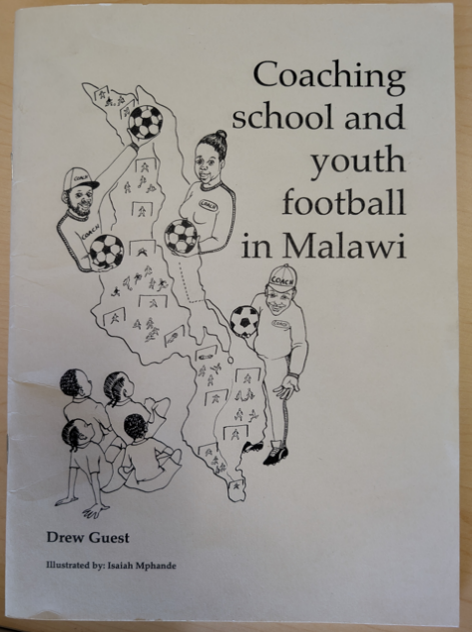
Notes from FOM President Andrew Guest: As we head into fall, I hope everyone had a good summer – and that during August you may have had the chance to follow the Malawi women’s national team in their first appearance at the Women’s Africa Cup of Nations. The “Scorchers” (to contrast with the men’s team known as the “Flames”) were a sensation, prompting ESPN to ask whether Malawi’s run to the tournament final was “the most remarkable major tournament performance ever” (in the history of global soccer)! It was Malawi’s debut at a major international competition, they were the lowest-ranked team there (at 153rd in the world rankings), yet they managed to beat more traditional African soccer powers Ghana, Egypt, and Nigeria on their way to qualifying for the Women’s World Cup next year in Brazil!
For us Friends of Malawi it was great to have some good news about Malawi on the global stage, and for me personally it had a bit of extra interest. When I was a Peace Corps volunteer in Malawi between 1996 and 1998 my assignment was as a ‘Physical Education and School Sport Specialist’ at the Malawi Institute of Education in Domasi, which meant I did teacher training, coach training, and curriculum development around the country. As one part of that work, I collaborated with Malawian colleagues to write a soccer coaching guidebook that was distributed to school libraries across the country – and despite the fact that in the ‘90s it was fairly rare to see girls and women playing soccer in Malawi, we insisted on having all the illustrations and examples involve both men and women. I don’t know whether that book ever got much use, but I like to imagine that it may have made some very small contribution somewhere along the way to the recent success of the Scorchers. The real credit, of course, goes to the women themselves and particularly the Chawinga sisters who inspired the team throughout the tournament.
But it may also be a reminder that you never quite know how or when our connections to Malawi might matter. So I hope as you read on through this quarterly newsletter for updates on how Friends of Malawi is putting your donations to work through small grants, and for a story from FOM board member Sarah Swenson about her conservation work in Liwonde during her Peace Corps service. (And I hope you also start making plans to watch Malawi’s Scorchers at the 2027 Women’s World Cup in Brazil next summer!)
Grants Update: Supporting Grassroots Impact
Over the past quarter, Friends of Malawi continued to work with our Malawian partner organizations to translate the generous donations of our members into grassroots projects that align with our mission. It turned out to be a goat-heavy quarter for us! This included providing small grants to complete the needed funding for two CorpsAfrica projects:
- Bridget Chauma Banda’s Tukolerane Integrated Goat Farming and Yoghurt Production (funding the remaining balance of $3,226.50 USD) in Mweningolongo Village, T/A Kilipula, Karonga District.
- Monica Kayange’s Nthumbila Community Goat Farming Project (funding the remaining balance of $1,284.98 USD) in Nthumbila village, T/A Kaluluma, Kasungu.
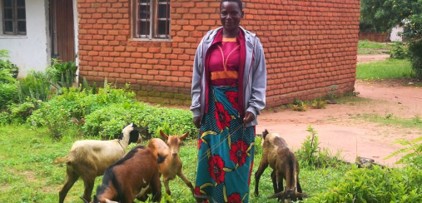
The Friends of Malawi “micro grant” funds we provide to Peace Corps Malawi also found some use this quarter by contributing to a Kaundama CDSS Girls’ Empowerment Field Trip. As they reported:
The Friends of Malawi grant supported a one-day educational field trip for 12 girls from Kaundama Community Day Secondary School (CDSS), a Peace Corps Volunteer and two teachers. The purpose was to motivate girls to stay in school, strengthen their academic aspirations, and expose them to Malawian women professionals who share similar rural backgrounds. The trip was developed in partnership with the American Center in Lilongwe and aimed to foster long-term empowerment, improve academic persistence, and contribute indirectly to healthier futures for girls in the community.
For the remainder of 2026 we are working with our Malawi-based partners to provide more small grants, and are creating reliable mechanisms for connecting with partners who align with our mission (particularly in having some connection to Peace Corps in Malawi).
Stories of Malawi: Then and Now
Our latest RPCV story comes from Friends of Malawi Board Member Sarah Swenson, who has been a Friends of Malawi Board Member since 2020 and who served two Peace Corps stints in Malawi (between 2008-2011 & 2019-2020). Her piece is titled “Counting the Breaths of Giants: My Peace Corps Story from Malawi”
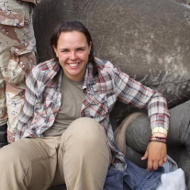 In 2008, during my service as a Peace Corps Volunteer in Malawi, my site mate Kori Cox and I found ourselves far outside the boundaries of our usual daily routines. We weren’t in a classroom, under the community chief tree or a community center. Instead, we were called into action at Liwonde National Park to assist with a massive, high-stakes conservation effort: a historic elephant translocation to Majete Game Reserve.
The High-Stakes Choreography of Wildlife Moving
The environment that day was a whirlwind of noise and motion. Helicopters buzzed overhead to deploy tranquilizers, while we scrambled into 4×4 vehicles to track the darted animals and assist the veterinary team with follow-up dosing.
My specific job sounded simple but carried immense weight: counting the respiratory breaths of heavily anesthetized elephants.
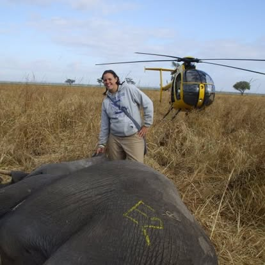 The veterinarians explained that because of the massive doses required, they used short-acting medications. This kept the animals stable during the chaotic move but ensured they could be safely woken back up the moment they reached the heavy transport containers.
It was a delicate, stressful choreography of heavy machinery and intense vigilance. We watched in awe as cranes carefully lifted bachelor males and entire family units—females and their calves—onto large trucks. Close monitoring was pivotal. One wrong move could mean disaster for both the sleeping giants and the teams working beneath them.
Beyond the Translocation: Grassroots Conservation
At the time, the entire operation felt extreme, almost surreal. But the stakes were higher than we even fully realized. Before African Parks took over management, Majete had been decimated by relentless poaching, leaving it on the brink of permanent closure. In fact, by 2002, its elephants were entirely gone.
Our long day of counting breaths wasn’t just about managing a surplus in Liwonde; it was about actively injecting life back into a park that had been left for dead.
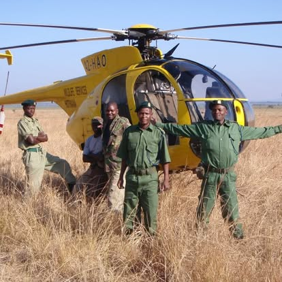 However, moving the animals was only half the battle. True, lasting conservation doesn’t happen from a helicopter or a crane—it happens at the community level.
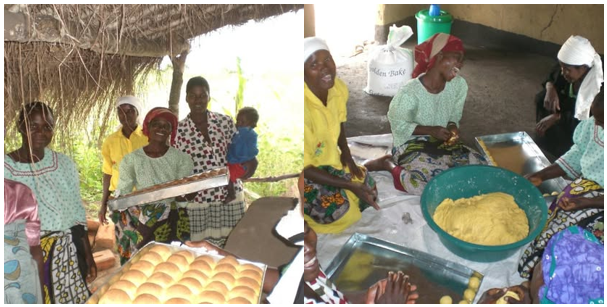
I spent the rest of my Peace Corps experience, from 2008 to 2011, working alongside women’s groups living just outside the boundaries of Liwonde National Park. Our goal was to tackle the root causes of the human-wildlife conflict and poaching that threatened both the people and the elephants. We focused on building sustainable, income-generating activities that could relieve the economic desperation that often drives individuals toward poaching income.
We also introduced alternative, eco-friendly cooking methods to protect the local forests. Together, we built energy-efficient clay cookstoves and manufactured sustainable charcoal briquettes made from compressed organic waste materials. This reduced the community’s reliance on firewood from the park, creating a safer, more sustainable relationship between the village and the protected wild spaces next door.
Deepening the Roots: A Trajectory in Leadership
Those intense, foundational years fundamentally changed the trajectory of my life. My bond with the Liwonde ecosystem and its communities only grew stronger. In 2011, I transitioned to serving as the Country Director for the international volunteer organization Big Beyond.
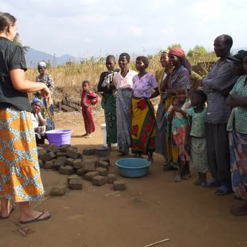 Remaining anchored around Liwonde National Park through 2012, this role allowed me to scale up our community development initiatives from a leadership perspective. Managing large-scale volunteer efforts on the ground, we continued building out the sustainable infrastructure needed to support the local population and alleviate pressure on the park’s boundaries.
This deep, multi-year local expertise seamlessly bridged the gap to my next chapter in 2012, when I stepped in as a consultant for the International Fund for Animal Welfare (IFAW).
Continuing my work in the area, I collaborated with IFAW to organize communities just outside of Mvuu Camp at the north end of Liwonde National Park. Building on years of community-led conservation strategies, we helped locals construct aquaculture fish ponds. By establishing a reliable, local source of protein and income right in their backyards, we provided a safe, sustainable alternative to entering the national park. It was a strategy designed to protect both the families from the dangers of the bush and the park’s vulnerable wildlife from poaching.
Where Are They Now?
Decades later, the legacy of those combined efforts—from global organizations down to grassroots community groups—is nothing short of a miracle. Both parks have completely transformed, proving that community-led conservation works.
Majete Game Reserve: From Depleted to “Big Five”
Majete Game Reserve didn’t just survive; it became one of Africa’s premier conservation success stories. By the mid-2010s, the elephant herds we helped move had bred so successfully that Majete actually reached full capacity, harboring around 400 elephants. The park transformed from a “sink” needing animals into a “source” population. Today, the park is home to more than 12,000 large mammals and stands proudly as a premier “Big Five” safari destination. Not a single elephant has been poached in Majete since their reintroduction.
Liwonde National Park: A Resurgent Ecosystem
When we were there in 2008, Liwonde was under immense pressure, overrun by wire snares and severe human-wildlife conflict. Today, managed in partnership with African Parks, Liwonde has undergone a massive predator renaissance. Predators were completely absent when we left, but the park has since successfully reintroduced cheetahs (2017) and wild lions (2018), restoring the natural balance of the ecosystem. The park also welcomed a historic translocation of black rhinos to boost regional breeding efforts.
To permanently address the human-wildlife conflict we witnessed, the park secured its entire 244-kilometer perimeter using an advanced, dual-layer “Kenya fence” system designed to resist elephant break-outs. Because of these protections and community-led initiatives, elephant poaching has dropped to zero, and the overall wildlife census has climbed past 12,000 animals.
Most poetically, Liwonde has become the ultimate cradle for African wildlife restoration. The park has grown so secure that it serves as the ultimate “source population” to save other sanctuaries. It supplied the bulk of the historic “500 Elephants” initiative to repopulate Nkhotakota Wildlife Reserve and later partnered with IFAW to move another 263 elephants to restore Kasungu National Park.
Knowing that a tiny, nerve-wracking task of counting elephant breaths—coupled with building clay stoves, pressing organic briquettes, and digging fish ponds with local communities—contributed to this thriving ecosystem is a reminder of why we serve. It shows how even the most chaotic moments and grassroots projects can pave the way for a wild, beautiful future.
Thank You for Being Part of This Community
Founded in 1987 by Returned Peace Corps Volunteers, FOM remains a nonprofit rooted in friendship, solidarity, and grassroots partnership. We’re proud to be affiliated with the National Peace Corps Association and grateful to each of you for your continued support.
Do you have a memorable story about your time or work in Malawi? We’d love to post it and share it with our members! Please send your stories to us at fomcommunications1963@gmail.com.
Please look forward to ongoing updates—and we invite you to stay engaged as we continue supporting projects and volunteers in Malawi.
As always, we are unable to support projects or continue our work without the generous donations of our members. If you would like to give, you can do so through friendsofmalawi.org.
Tiyeni patsogolo—let’s keep moving forward.
Zikomo,
The Friends of Malawi Board